
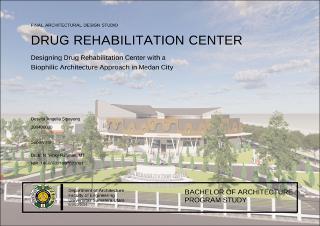
Designing Drug Rehabilitation Center with a Biophilic Architecture Approach in Medan City
Abstract
BNN noted that in North Sumatra Province there were 12,890 cases of drug abuse until the first quarter of 2021, and the highest number 1 in Indonesia (BNN, 2021). The National Narcotics Agency states that out of 14 million people in North Sumatra, 1.5 million are drug users, which is comparable to 1 in 10 people in North Sumatra being drug abusers. Victims of drug abuse need rehabilitation which functions as a process of healing back physical health including the emotional, psychological, and social aspects of victims so that they can return to the community environment to carry out activities as usual. Rehabilitation is the restoration of mental and physical health shown to drug addicts who have undergone a curative program. The goal is that addicts do not use illegal drugs anymore and are free from diseases such as physical damage (nerves, brain, lungs, kidneys, liver, and others), mental damage, changes in character from positive to negative, anti-social, diseases such as HIV / AIDS, hepatitis, syphilis, and others due to former drug use. (Subagyo 2006:105). According to the National Narcotics Agency, Drug Rehabilitation is a section devoted to rehabilitating victims of drug abuse. The rehabilitation center for victims of drug abuse is tasked with handling patients or victims of drug addicts so that treatment is carried out and restoring public health from using or being dependent on drug drugs (BNN, 2021). Drug Rehabilitation has the concept of Biophilic Architecture, which aims to translate the understanding of biophilia to the design of the built environment so that a beneficial relationship between humans and nature in buildings can be realized.
Collections
- Profession of Architect [205]