| dc.description.abstract | The waste problem is a global issue that Indonesia is now also facing, along with the increasing activities of society in daily life. In 2023, the national waste generated from 111 regencies/cities was 17.9 tons. Of the total volume of waste production, 66.83% has been managed, while the remaining 33.17% or 5.9 million tons of waste, has not been managed properly. The problem of waste is also certainly faced by the City of Binjai, North Sumatra.
Based on data from the Environmental Service (DLH) of Binjai City in 2023, the city's waste production reached 100-200 tons per day, most of which was disposed of in the Mencirim Landfill, East Binjai District. In 2023, the total waste entering the Mencirim landfill reached 58,419 tons. The high capacity of waste entering the Mencirim landfill and the lack of optimal waste management at the landfill have the potential to cause environmental
impacts.
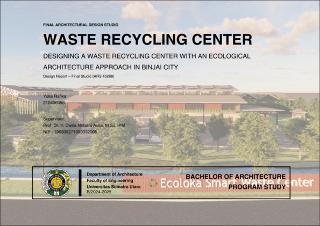
This research aims to design a Waste Recycling Center in Binjai City with an ecological architecture approach as a sustainable waste management solution. The method used in this research is a mixed method that combines quantitative and qualitative methods, with data collection through observation and interviews. This research resulted in the concept of a Recycling Center that integrates waste treatment systems, utilization of natural lighting, promotes energy conservation, and use of environmentally friendly materials to support the creation of a more sustainable urban environment. | en_US |